
Championing 150,000 Small Businesses
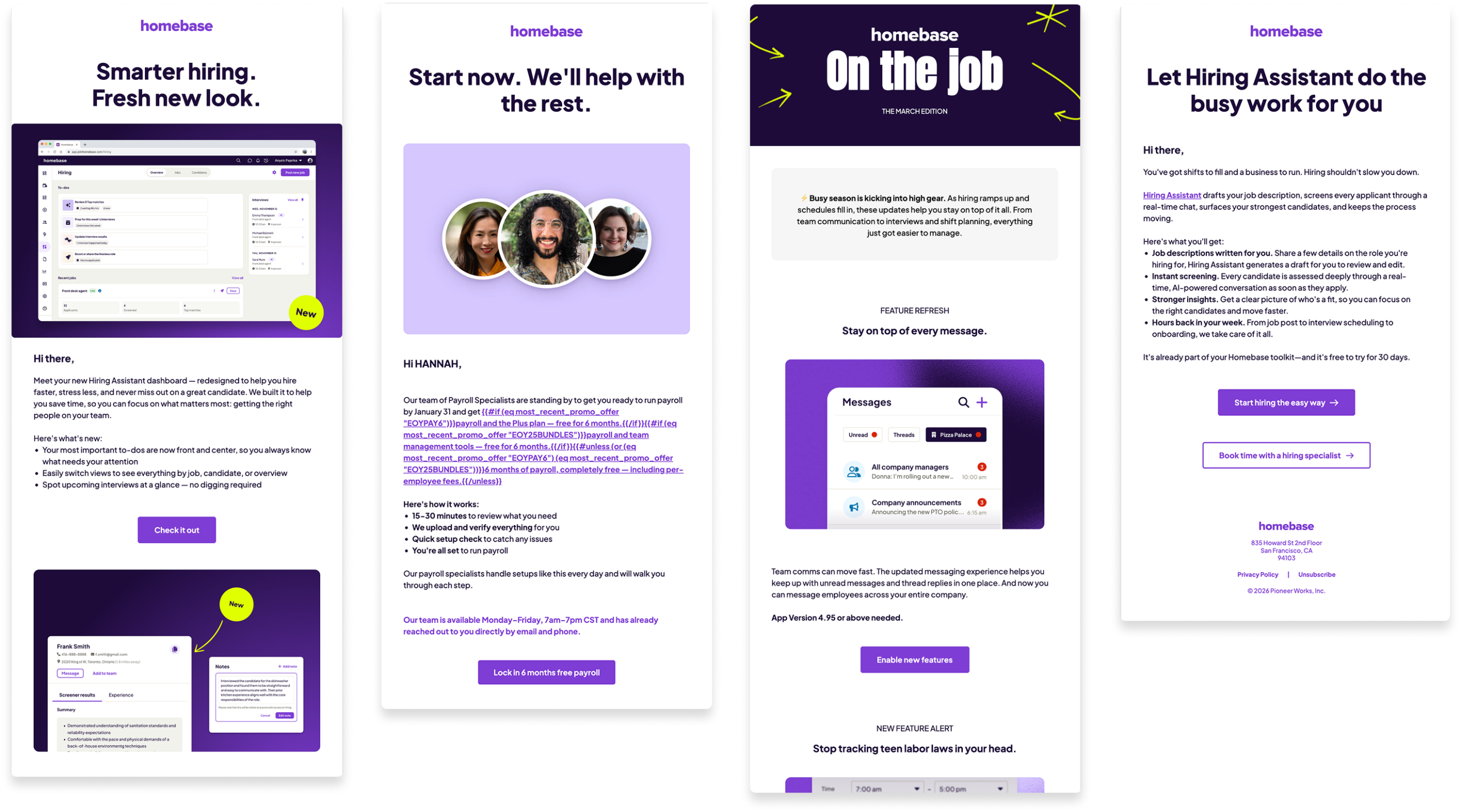
Homebase makes workforce management software for small businesses — scheduling, time tracking, payroll, and hiring for hourly teams across the U.S. and Canada. Their 150,000 customers range from franchise owners who've been running the same location for decades to 16-year-olds applying for their first job. The brand voice reflects that range: direct, warm, and deliberately human.
Darin Thacker leads Lifecycle Marketing at Homebase. His team, like most lifecycle teams, doesn't include dedicated HTML developers. Iterable's native templates and built-in design system worked up to a point, but the flexibility wasn't there for a team that needed to move fast and self-serve. So they did what resourceful marketers do: they learned enough HTML to get by.
Getting by had a cost.
A Design System the Marketing Team Self-Serves
Homebase didn't just import their old templates into Dyspatch. Their creative team used the transition as an opportunity to rebuild their email design system from scratch — auditing what they had, keeping only what held up, and expanding from there.
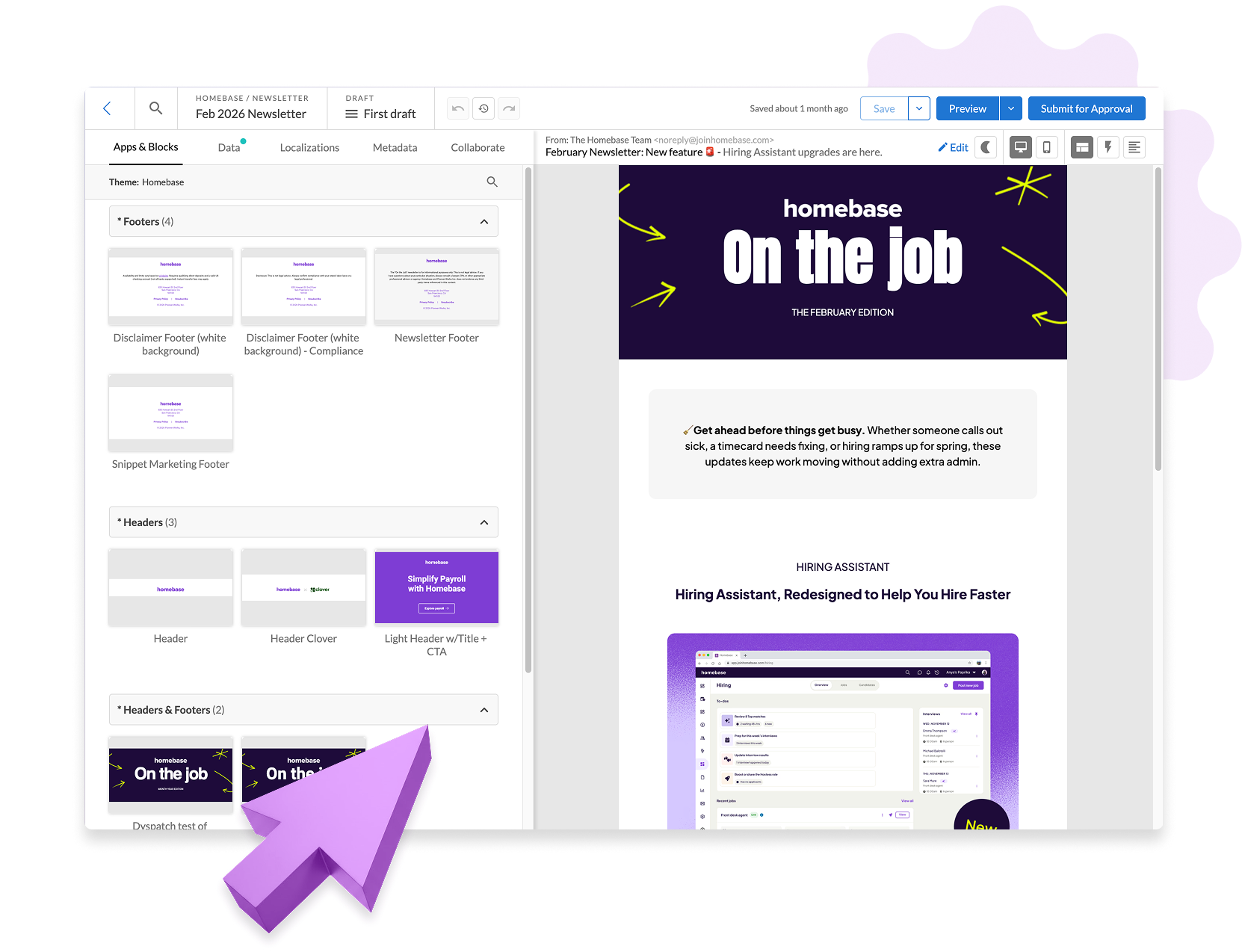
The result is a shared component library that any team at Homebase can pull from: competitor comparison tables, ghost CTAs, promo banners, refreshed iconography, social link footers. Every block is pre-approved and brand-safe, with Dyspatch's guardrails baked in — which means less time spent on QA and fewer regressions introduced during edits.
Dyspatch's Scribe AI tools accelerated the build further. Instead of coding new components from scratch, the team could describe what they needed and get production-ready blocks that matched their brand guidelines. Consistency stopped being something to manually enforce and became something the system handled by default.
The design system caught on internally. Darin ran a walkthrough for the product marketing and creative teams, and colleagues wanted access of their own. Homebase added seats so other teams could build emails independently when lifecycle was at capacity.
Personalization Without the Version Sprawl
Homebase operates across five messaging surfaces: email, SMS, push, in-app, and web. Deciding which lever to pull for which audience is core to the lifecycle team's job, and email personalization is central to that strategy.
Before Dyspatch, personalizing emails meant maintaining separate template versions for different audience segments. A customer with payroll got a different email than one without — which meant separate builds, separate QA, and a growing library of near-identical templates that became harder to manage over time.
With Dyspatch's conditional content blocks, the team now builds once. Audience attributes show or hide modules dynamically, so a promotional banner for payroll features only appears for customers who meet specific eligibility criteria — no duplicate templates required.
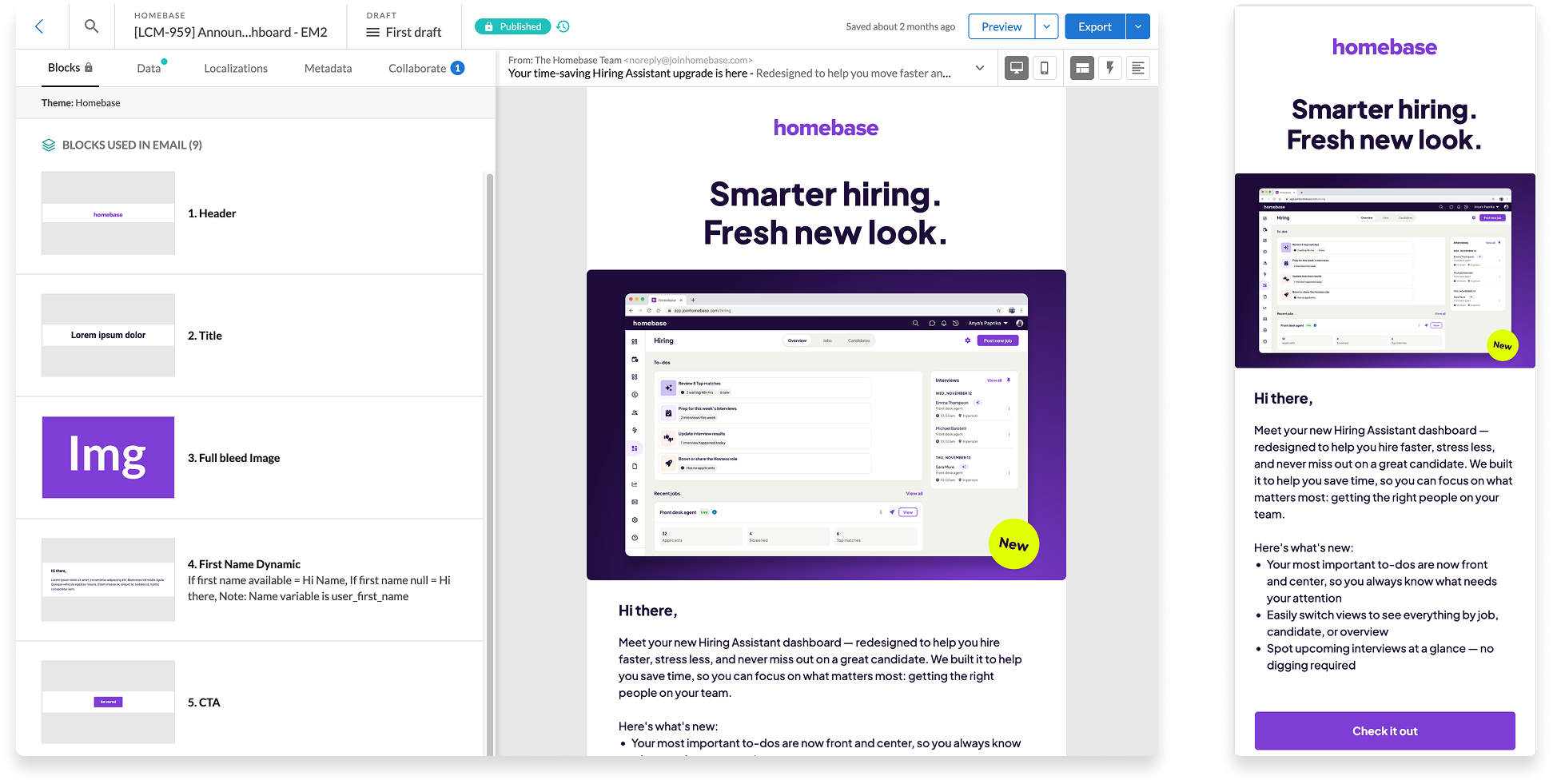
Kayla Williams, a former lifecycle marketer on Darin's team, pointed to a payroll adoption campaign as an example. They built a single email with a zigzag layout of alternating product features, each tailored by segment using dynamic content blocks. The campaign pulled a 42% unique open rate and a 2.19% click-to-open rate.

Start growing with Dyspatch
Streamline your email workflow and get better results today.
Tearing down an iconic brand email – the ingredients to Domino’s email success
Domino’s is an iconic brand, synonymous with my favorite food ever: Pizza. Some traditional brick and mortar businesses get a bad rep when it comes to … Read now about Tearing down an iconic brand email – the ingredients to Domino’s email success
How Image Line built a performance-first email system for millions of music producers
Dark Mode Is a Business Metric: How Image Line built a performance-first email system for millions of music producers The Problem|Dark Mode … Read now about How Image Line built a performance-first email system for millions of music producers

How Urbandoor moves faster when testing and iterating on email content
How Urbandoor moves faster when testing and iterating on email content Executive summary | The challenge | The Dyspatch solution | The results | … Read now about How Urbandoor moves faster when testing and iterating on email content